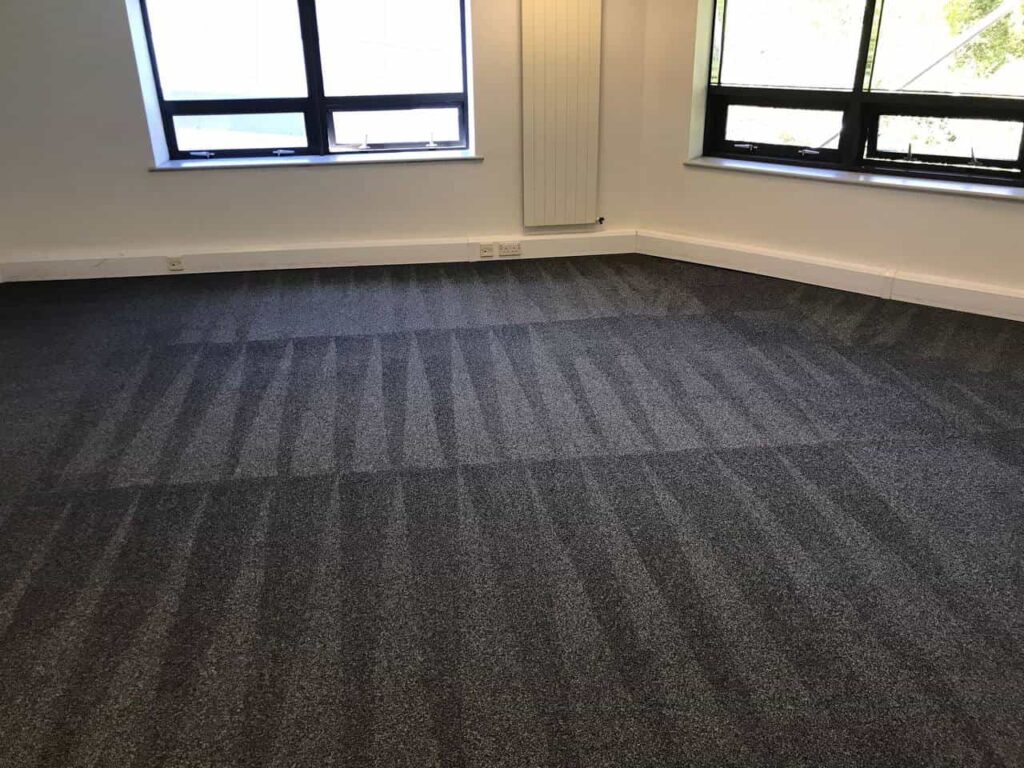
Regular vacuuming removes loose debris from the visible surface of a carpet, but it cannot always reach particles that have settled deeper into the pile. Fine dust, grit, soil and residues can gradually work their way towards the backing, particularly in busy walkways and frequently used rooms.
This hidden accumulation can affect how a carpet looks, feels and responds to everyday use. Understanding what happens beneath the surface explains why a carpet may still appear dull even when it is vacuumed regularly.
How Deep-Seated Dirt Affects Your Carpet
Foot Traffic Pushes Particles Further Into the Pile
Dirt usually enters a property on footwear, clothing, bags and through open doors or windows. Larger pieces may remain on the surface initially, while finer particles fall between the fibres.
Every time somebody walks across the carpet, pressure drives these particles further down. In high-traffic areas, repeated use can compact dirt close to the backing, where ordinary vacuum suction may struggle to remove it.
Fine Grit Can Wear Against Carpet Fibres
Soil and grit can contain hard, sharp-edged particles. As people walk across the carpet, these particles rub against the surrounding fibres.
Over time, this abrasion may make the pile look worn, faded or uneven. The damage can be mistaken for ordinary staining because the affected fibres no longer reflect light consistently. Removing embedded grit helps reduce this continuing friction.
Colours Begin to Look Dull
Carpet colour depends partly on light reflecting evenly from clean fibres. When dust and oily residue coat the pile, the surface absorbs and scatters light differently.
This creates a grey, muted or generally tired appearance, especially along walkways, beside sofas and near entrances. Vacuuming may remove loose surface dust but leave the bonded film and deeper particles behind.
Fibres Can Become Flattened and Matted
Embedded soil increases friction between fibres and makes it harder for the pile to recover after being compressed. Areas exposed to repeated foot traffic may gradually become flat, dense or matted.
Professional cleaning can remove much of the material restricting the pile. The extent of visual improvement will depend on the carpet’s construction and whether the fibres have experienced permanent wear.
Oily Residues Hold Onto More Dirt
Not all carpet contamination is dry. Cooking vapours, skin oils, product residues and small spillages can leave a film on the fibres. Dry soil then sticks to this film rather than being collected easily by a vacuum.
As more particles attach, the carpet can become dirty again quickly after routine cleaning. Appropriate treatment is needed to loosen the oily residue before the suspended soil can be extracted.
Spillages Can Travel Below the Surface
A visible mark may represent only part of a spillage. Liquid can move through the carpet pile and reach the backing or material beneath it.
If only the surface is treated, some residue may remain below. Moisture can later carry this material back up the fibres as the carpet dries, causing the stain to reappear. This process is often referred to as wicking.
Correct cleaning must consider the depth and type of contamination rather than repeatedly wetting the visible mark.
Trapped Contamination Can Cause Unpleasant Odours
Food particles, drink residues, pet-related contamination and general household soil may produce odours when they remain within a carpet. Applying fragranced products may temporarily mask the smell without removing its source.
A thorough cleaning process aims to separate and extract the material responsible for the odour. Where contamination has reached the backing or underlay, the extent of the affected area must be assessed carefully.
Vacuuming Has Practical Limitations
Vacuuming remains essential for controlling everyday dust and loose debris. Its effectiveness, however, depends on the machine, carpet type, pile depth and how firmly the particles have become embedded.
A vacuum may struggle with:
- Fine soil compacted at the base of the pile
- Sticky or oily residues
- Dried spillages
- Particles trapped within dense fibres
- Contamination that has reached the backing
- Marks requiring specialised treatment
This does not make vacuuming ineffective; it means that routine maintenance and periodic deep cleaning perform different roles.
Deep Dirt Can Make Carpets Soil More Quickly
When residue remains within the pile, it can continue attracting new dirt. Cleaning products left behind after unsuitable spot treatment may also create sticky areas that soil faster than the surrounding carpet.
Proper rinsing and extraction are therefore important. Removing both the contamination and cleaning residue helps leave the fibres in a condition that is easier to maintain.
How Professional Carpet Cleaning Reaches Deeper Soil
Professional cleaning begins with assessing the carpet fibre, construction and type of soiling. Suitable pre-treatment can then loosen bonded dirt and oily contamination.
Agitation helps distribute the treatment and separate particles from the fibres. The carpet is then rinsed and extracted using a method appropriate for its material and condition.
A methodical process may include:
- Thorough dry-soil removal
- Testing fibres and affected areas
- Applying suitable pre-treatment
- Agitating heavily soiled sections
- Treating individual spots separately
- Controlled rinsing and extraction
- Managing moisture to support even drying
This process reaches material that surface vacuuming alone cannot remove.
Why the Correct Cleaning Method Matters
Different carpet fibres respond differently to moisture, heat and cleaning solutions. Using an unsuitable product or applying too much liquid can leave residue, affect the texture or cause marks to return.
Professional assessment allows the cleaning method to be matched to the carpet rather than treating every surface in the same way. This supports effective soil removal while avoiding unnecessary saturation.
Conclusion
Dirt that settles deep inside carpet fibres does not simply remain hidden. It can abrade the pile, dull colours, contribute to matting, retain odours and make the carpet soil more quickly. Although regular vacuuming is important, it may not remove compacted particles or bonded residues from the lower pile.
Beddington Carpet Cleaning provides professional deep carpet cleaning in Beddington, Sutton. If your carpets remain dull or tired despite regular vacuuming, contact the team to arrange an assessment and suitable cleaning service.
Call us on: 0203 840 3377
Click here to find out more about Beddington Carpet Cleaning
Click here to complete our contact form and see how we can help with your Carpet needs.